
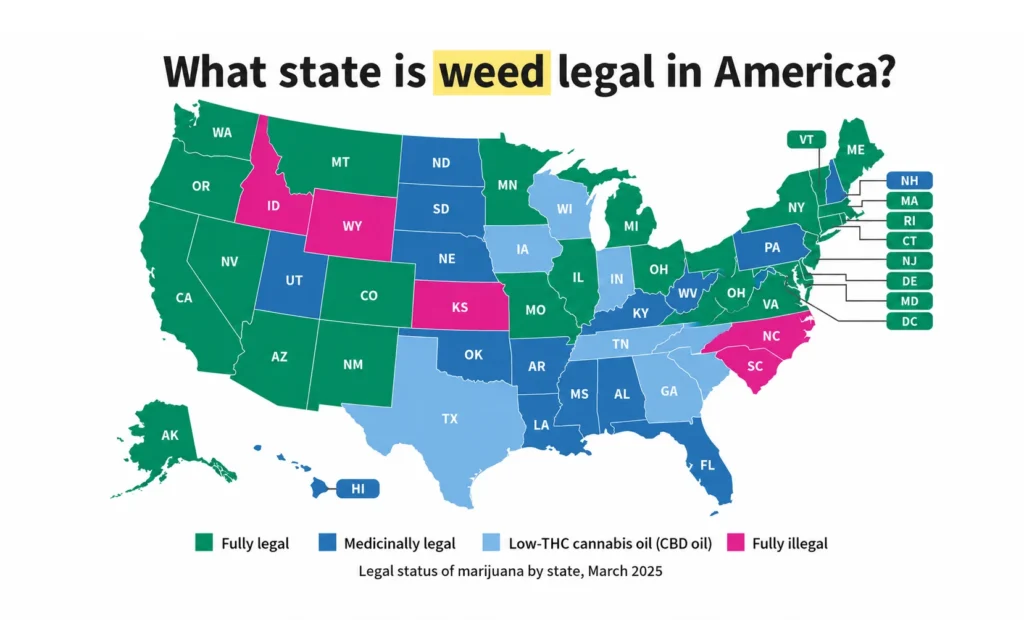
Many people ask, what states are weed legal in America, as marijuana laws continue to change across the country. While some states allow recreational cannabis, others only permit medical marijuana or limited THC products under specific state regulations.
Marijuana laws in the United States vary depending on the state. Some states allow adults to legally purchase and use recreational weed, while others restrict cannabis use to qualified medical patients. Understanding where weed is legal can help individuals avoid potential legal problems, and if you’re facing marijuana-related charges in Texas, a Houston drug offense attorney can help you understand the rules that apply.
Is Weed Legal in the United States?
Weed is not fully legal across the United States because marijuana laws are different at the federal and state levels. While several states have legalized recreational or medical cannabis, federal law still classifies marijuana as a controlled substance.
Under the federal Controlled Substances Act, marijuana remains illegal nationwide. However, many states have passed their own laws allowing recreational marijuana, medical cannabis, or limited hemp-derived products within specific legal requirements.
What States Have Legal Recreational Weed?
Several states have legalized recreational marijuana for adults who meet the minimum age requirement established by state law. These states allow adults to purchase, possess, and use cannabis within limits set by state regulations.
States where recreational weed is legal include:
- Alaska: Adults 21 and older can legally possess and use recreational marijuana under state law. Cannabis sales are regulated through licensed marijuana businesses.
- Arizona: Recreational marijuana is legal for adults 21 and older under the Arizona Smart and Safe Act. The law allows regulated purchases through licensed dispensaries.
- California: California legalized recreational marijuana through Proposition 64, allowing adults to purchase, possess, and use cannabis within state limits.
- Colorado: Colorado became one of the first states to legalize recreational marijuana. Adults can purchase cannabis products from licensed retailers under state regulations.
- Connecticut: Connecticut allows adults 21 and older to legally purchase and possess recreational marijuana through licensed cannabis retailers.
- Illinois: Illinois legalized recreational marijuana under the Cannabis Regulation and Tax Act, allowing adult-use cannabis purchases from approved dispensaries.
- Maine: Maine permits recreational marijuana possession and use for adults while regulating cannabis cultivation and sales.
- Massachusetts: Massachusetts allows adults to purchase recreational marijuana from licensed cannabis businesses under state regulations.
- Michigan: Michigan legalized recreational marijuana through Proposal 1, allowing adults to possess and use cannabis within legal limits.
- Montana: Montana permits recreational marijuana use for adults and regulates cannabis sales through licensed businesses.
- Nevada: Nevada allows adults 21 and older to purchase and possess recreational marijuana through licensed dispensaries.
- New Jersey: New Jersey legalized adult-use marijuana under the Cannabis Regulatory, Enforcement Assistance, and Marketplace Modernization Act.
- New Mexico: New Mexico allows recreational marijuana possession and sales through licensed cannabis retailers.
- New York: New York legalized recreational marijuana and established a regulated adult-use cannabis market.
- Oregon: Oregon allows adults to purchase and possess recreational marijuana through licensed cannabis businesses.
- Vermont: Vermont legalized recreational marijuana possession and later established regulated cannabis sales.
- Virginia: Virginia allows adults to possess limited amounts of marijuana, although commercial recreational sales remain restricted.
- Washington: Washington legalized recreational marijuana through Initiative 502 and regulates cannabis businesses statewide.
These states allow recreational marijuana, but each state has different rules regarding possession limits, purchasing requirements, public use, and home cultivation. Always check the specific laws of the state before possessing or using cannabis.
Which States Have Legal Medical Marijuana?
Many states allow medical marijuana for patients who have qualifying medical conditions and receive approval under state programs. These laws generally require patients to obtain certification from a licensed healthcare provider and purchase cannabis through regulated dispensaries.
Medical marijuana laws vary by state and may limit the types of products available, possession amounts, and approved medical conditions. States with medical marijuana programs include:
- Alabama: Alabama allows medical cannabis for registered patients with qualifying conditions under the Darren Wesley “Ato” Hall Compassion Act. Patients must receive certification from an approved physician.
- Arkansas: Arkansas permits medical marijuana use through the Arkansas Medical Marijuana Amendment. Registered patients can purchase cannabis from licensed dispensaries.
- Delaware: Delaware allows medical marijuana for qualifying patients through the Delaware Medical Marijuana Program. Patients must receive approval based on eligible medical conditions.
- Florida: Florida allows medical marijuana for qualified patients with physician approval. The state regulates medical cannabis through licensed Medical Marijuana Treatment Centers.
- Georgia: Georgia permits limited low-THC cannabis oil for registered patients with certain medical conditions. The state does not currently allow full medical marijuana sales.
- Hawaii: Hawaii allows medical marijuana for registered patients through licensed dispensaries and state-approved medical cannabis programs.
- Idaho: Idaho does not currently have a comprehensive medical marijuana program and maintains strict restrictions on cannabis.
- Indiana: Indiana does not currently allow medical marijuana and only permits certain hemp-derived products under state law.
- Iowa: Iowa allows medical cannabis for patients with qualifying conditions through the state’s medical cannabidiol program.
- Kansas: Kansas does not currently have a medical marijuana program and maintains restrictions on marijuana possession and use.
- Kentucky: Kentucky allows medical cannabis for qualifying patients through its medical marijuana program.
- Louisiana: Louisiana allows medical marijuana for patients with qualifying medical conditions through approved physicians and licensed pharmacies.
- Maryland: Maryland legalized recreational marijuana, but it also maintains a medical cannabis program for registered patients.
- Minnesota: Minnesota allows medical marijuana through its state medical cannabis program and also permits adult-use cannabis.
- Mississippi: Mississippi allows medical marijuana for qualified patients through the Mississippi Medical Cannabis Act.
- Missouri: Missouri allows both medical and recreational marijuana, with regulated access through licensed cannabis businesses.
- North Dakota: North Dakota allows medical marijuana for registered patients with qualifying medical conditions.
- Ohio: Ohio allows medical marijuana for qualifying patients and also permits adult-use recreational cannabis.
- Oklahoma: Oklahoma allows medical marijuana for patients with physician approval and has one of the more accessible medical cannabis programs.
- Pennsylvania: Pennsylvania allows medical marijuana for registered patients with qualifying conditions through licensed dispensaries.
- Rhode Island: Rhode Island allows medical marijuana and recreational cannabis use for adults under state regulations.
- South Dakota: South Dakota allows medical marijuana for registered patients and permits recreational cannabis under state law.
- Utah: Utah allows medical cannabis for patients with approved medical conditions through licensed providers.
- West Virginia: West Virginia allows medical marijuana for registered patients through licensed dispensaries.
- Wisconsin: Wisconsin does not have a medical marijuana program but allows limited hemp-derived CBD products.
Medical marijuana laws continue to change as more states review cannabis regulations. Patients should verify current state requirements before purchasing or possessing cannabis products. Always check the specific laws of the state before possessing or using cannabis, and if you’re facing a marijuana-related charge in Texas, a drug crime lawyer near me can help you understand your legal options.
What States Still Have Illegal Weed Laws?
Some states continue to prohibit recreational marijuana and have limited or no medical cannabis access. In these states, marijuana possession, sale, and cultivation may result in criminal penalties.
States with stricter marijuana laws include:
- Idaho: Idaho maintains some of the strictest marijuana laws in the country and does not allow recreational or medical marijuana.
- Kansas: Kansas prohibits recreational marijuana and does not have a comprehensive medical marijuana program.
- Nebraska: Nebraska allows limited medical cannabis access but maintains restrictions on recreational marijuana.
- South Carolina: South Carolina does not allow recreational marijuana and has limited cannabis-related exceptions.
- Tennessee: Tennessee prohibits recreational marijuana and only allows limited hemp-derived products.
- Wyoming: Wyoming continues to restrict marijuana possession, cultivation, and distribution.
Marijuana laws can change frequently as states introduce new legislation. Anyone traveling with cannabis should understand the laws of both their home state and destination state.
How Does Federal Law Differ From State Marijuana Laws?
Federal and state marijuana laws are not the same. While many states have legalized recreational or medical marijuana, federal law continues to classify marijuana as a controlled substance under the Controlled Substances Act.
Under 21 U.S.C. § 812, marijuana is classified as a Schedule I controlled substance under federal law. This means marijuana remains illegal federally, even if a state allows recreational or medical cannabis use. Federal restrictions may still apply on federal property, during interstate transportation, and in other situations involving federal jurisdiction.
State marijuana laws only apply within that state’s jurisdiction and do not override federal law.
Can You Travel Between States With Weed?
No. Traveling across state lines with marijuana can create legal issues, even if both states have legalized recreational cannabis. Crossing state borders with marijuana may violate federal law because interstate transportation falls under federal jurisdiction.
Before traveling, individuals should review the marijuana laws of both their departure and destination states. Possessing cannabis where it is legal does not automatically make interstate transportation legal.
What Is the Difference Between Legal, Medical, and Decriminalized Weed?
Marijuana laws in the United States vary depending on how each state regulates cannabis. Recreational legalization, medical marijuana programs, and decriminalization each have different rules regarding who can possess weed, how it can be obtained, and what penalties may apply.
- Legal Recreational Weed: Adults who meet the state’s minimum age requirement can legally purchase, possess, and use marijuana for personal purposes. However, states still regulate possession limits, where cannabis can be purchased, where it can be consumed, and whether home cultivation is allowed.
- Medical Marijuana: Medical marijuana is available only to patients who have qualifying medical conditions and approval from a licensed healthcare provider. These programs usually require registration with the state and limit cannabis purchases to licensed dispensaries or approved providers.
- Decriminalized Marijuana: Decriminalization reduces the penalties for possessing small amounts of marijuana but does not make cannabis fully legal. A person may receive a civil fine or reduced penalty instead of facing traditional criminal charges, depending on state and local laws.
- Illegal Marijuana: In states where marijuana remains illegal, possession, sale, cultivation, and distribution can result in criminal charges. Penalties may include fines, probation, jail time, or felony charges depending on the amount involved and the circumstances of the offense.
Understanding these differences is important because marijuana laws can change significantly between states. A person who legally possesses cannabis in one state may still face legal consequences in another state with stricter regulations.
What Are the Penalties for Illegal Marijuana Possession?
Marijuana possession penalties vary across the United States depending on the state, the amount of cannabis involved, and whether the offense involves possession, distribution, or cultivation. Even in states with legalized marijuana, violating possession limits or possessing cannabis in prohibited circumstances can still result in legal consequences.
- Fines and Civil Penalties: Many states impose fines for possessing small amounts of marijuana, especially in states where possession has been decriminalized. The amount of the fine depends on state law, the quantity possessed, and whether the person has prior offenses.
- Misdemeanor Marijuana Charges: Possession of marijuana above the allowed limit may result in misdemeanor charges in some states. For example, under Texas Health and Safety Code § 481.121, possession of marijuana is a criminal offense with penalties based on the amount possessed, including possible fines and jail time.
- Felony Marijuana Charges: Larger amounts of marijuana or offenses involving distribution and intent to sell can result in felony charges. In Texas, possession of larger quantities may lead to felony penalties under Texas Health and Safety Code § 481.121, with increased punishments based on the total weight of marijuana involved.
- Probation and Court Requirements: Courts may impose probation, drug education programs, community service, or other requirements for certain marijuana offenses. The conditions depend on the state, the seriousness of the charge, and the defendant’s criminal history.
- Permanent Criminal Record: A marijuana conviction may create a criminal record that can affect employment, housing, education, and professional opportunities. Some states provide expungement options, but eligibility depends on the state’s specific laws.
- Federal Marijuana Penalties: Although many states have changed their marijuana laws, federal law still prohibits marijuana possession under the Controlled Substances Act, 21 U.S.C. § 844. Federal penalties can include fines and imprisonment depending on the circumstances of the offense.
The consequences of a marijuana possession charge depend on the state where the offense occurs, the amount involved, and the specific facts of the case.
What Should You Do if You Are Charged With a Marijuana Offense?
Being charged with a marijuana offense can have serious legal consequences, even in states that have legalized cannabis under certain circumstances. Taking the right steps can help protect your legal rights.
- Remain Silent: Avoid discussing your case with law enforcement beyond providing basic identifying information. Anything you say may be used against you during legal proceedings.
- Request an Attorney: Ask to speak with a qualified criminal defense lawyer before answering questions or signing any documents related to your case.
- Preserve Important Documents: Keep copies of citations, court notices, arrest records, and any paperwork related to your case for your attorney’s review.
- Follow Court Orders: Attend every scheduled court appearance and comply with all court requirements to avoid additional legal consequences.
- Avoid Discussing the Case Publicly: Do not post details about your arrest or charges on social media, as those statements may become evidence.
Taking prompt action after a marijuana arrest can improve your ability to protect your rights and prepare a strong legal defense.
How Can a Marijuana Defense Lawyer Help?
A marijuana defense lawyer can review your case, explain the laws that apply in your state, and protect your rights throughout the legal process. Experienced legal representation may help reduce penalties or identify defenses that could improve the outcome of your case.
- Review the Evidence Against You: A lawyer can examine police reports, witness statements, and laboratory evidence to identify weaknesses in the prosecution’s case. They may challenge evidence that was obtained unlawfully or lacks sufficient proof.
- Challenge Illegal Searches and Seizures: An attorney can determine whether law enforcement violated your constitutional rights during the investigation. Evidence obtained through an unlawful search may be challenged in court.
- Negotiate With Prosecutors: A defense lawyer may seek reduced charges, alternative sentencing, or dismissal when appropriate based on the facts of the case.
- Build a Strong Defense Strategy: Every marijuana case is different, and an attorney can develop a defense based on the evidence, applicable laws, and procedural issues.
- Protect Your Future Opportunities: A criminal conviction can affect employment, housing, education, and professional licensing. A lawyer can work to minimize the long-term consequences of a marijuana charge.
A marijuana defense lawyer can provide experienced legal guidance and advocate for the best possible outcome based on the circumstances of your case.
Talk to a Marijuana Defense Lawyer
Marijuana laws continue to evolve across the United States, but legal risks still exist depending on where you live or travel. Understanding which states have legalized weed, which only allow medical marijuana, and where cannabis remains illegal can help you make informed decisions and avoid unnecessary legal problems.
If you are facing marijuana-related charges, an experienced attorney from Juan L. Guerra, Jr. & Associates, PLCC can explain your legal options, protect your constitutional rights, and work toward the best possible outcome for your case.