

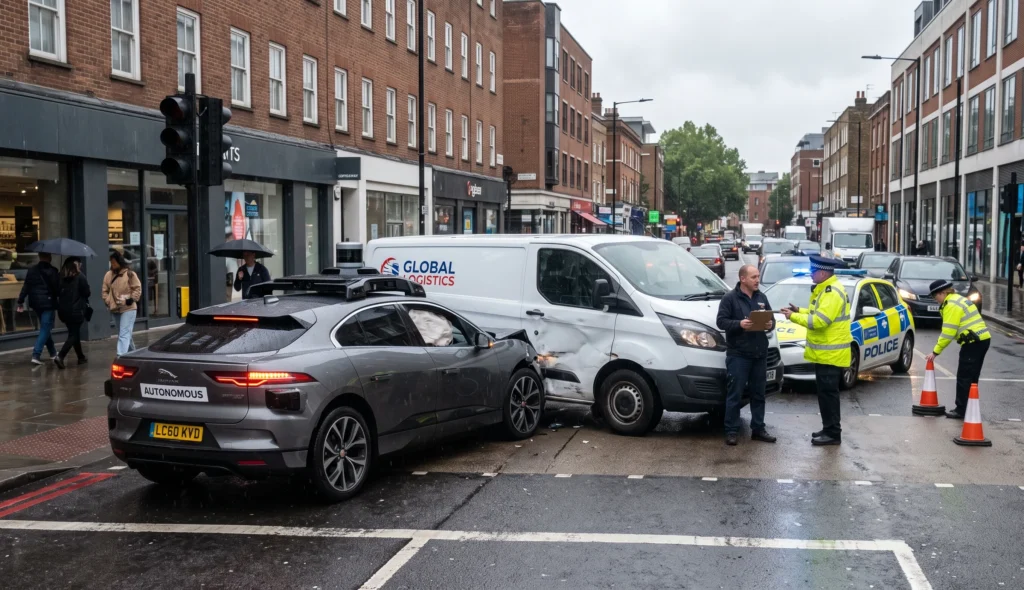
Self-driving vehicles are changing how people travel on Texas roads, but determining responsibility after an autonomous vehicle crash can be much more complicated than a traditional collision. When an automated driving system fails to detect a hazard, responds improperly, or malfunctions, potential liability may involve the vehicle owner, manufacturer, software developer, technology provider, or another negligent party.
If you were injured in a self-driving car accident in Houston, you may be asking: Who is responsible when a human was not actively controlling the vehicle? The answer depends on how the collision occurred, what level of automation was operating, whether a human was expected to intervene, and whether another person or company contributed to the crash. A self driving car accident lawyer can investigate these factors, identify potentially liable parties, and help determine what legal options may be available.
What Is a Self-Driving Car Accident?
A self-driving car accident occurs when a vehicle equipped with an automated driving system becomes involved in a collision. Depending on the technology, automated systems may control some driving functions while a human occupant remains responsible for monitoring the vehicle or taking control when required.
Texas law addresses the operation of automated motor vehicles and assigns responsibility for certain requirements to the automated driving system owner or operator. Because autonomous vehicles rely on cameras, radar, sensors, software, mapping systems, and other technologies, determining what caused a crash may require considerably more investigation than a conventional traffic accident.
For information about transportation safety and roadway conditions in Texas, motorists can consult the Texas Department of Transportation.
Who Can Be at Fault in a Self-Driving Car Crash?
There is no automatic rule stating that the vehicle owner or manufacturer is responsible whenever an autonomous vehicle crashes. Liability depends on the specific facts and evidence.
Potentially responsible parties may include:
The Vehicle Owner
A vehicle owner could potentially share responsibility if negligent conduct contributed to the collision. Examples may include failing to maintain the vehicle, making unauthorized modifications, or improperly using the automated driving technology.
The Vehicle Manufacturer
A manufacturer may potentially be liable if a defective vehicle or component contributed to the crash. Investigators may examine brakes, steering systems, cameras, sensors, electronic controls, and other components.
The Automated Driving System Developer
Software plays a critical role in autonomous vehicles. If defective programming, an unsafe software design, or an automated driving system failure caused the vehicle to respond improperly, the technology developer may become an important part of the investigation.
A Sensor or Technology Provider
Autonomous vehicles may use technology supplied by several companies. A defective camera, radar system, sensor, communication component, or other technology could potentially contribute to an accident.
A Human Driver or Occupant
Some automated vehicles still require human supervision or intervention. If a person was expected to monitor the system or take control and failed to do so, that person’s conduct may become relevant to determining fault.
Another Motorist
An autonomous vehicle is not necessarily responsible simply because it was operating in automated mode. Another driver could cause the collision by speeding, running a red light, driving while distracted, following too closely, or making an unsafe lane change.
How Is Fault Determined After a Self-Driving Car Accident?
Determining fault requires examining what the vehicle, technology, drivers, and roadway were doing immediately before the collision.
Investigators may review:
- Vehicle camera recordings
- Sensor and perception data
- Automated driving system logs
- Event data
- GPS information
- Mapping data
- Software versions and updates
- Vehicle maintenance records
- Driver or occupant actions
- Traffic signals
- Roadway conditions
- Witness statements
- Police reports
- Cell phone records
- Vehicle inspection findings
Can You Sue a Self-Driving Car Manufacturer After a Crash?
Potentially, yes. A manufacturer or technology company may face legal responsibility when a defective vehicle, component, or automated driving technology causes a collision resulting in legally compensable injuries. However, proving a product liability claim generally requires evidence connecting the alleged defect or failure to the accident and resulting harm. The appropriate legal theory will depend on the circumstances.
What If the Self-Driving System Was Working Properly?
For example, another motorist may suddenly enter its path, run a red light, or make an unsafe maneuver. If that driver’s negligence caused the collision, the other motorist may be primarily responsible. If you were injured in this type of crash, a self-driving car accident lawyer can help determine whether the other driver, vehicle manufacturer, or another party may be liable.
Texas law establishes duties for drivers involved in collisions, including requirements concerning stopping and providing information after certain crashes. Therefore, an investigation should consider every potentially responsible person and entity instead of automatically blaming autonomous technology.
What Evidence Can Help Prove Fault?
Evidence can be especially important in self-driving vehicle cases because critical information may exist electronically rather than at the accident scene.
Potential evidence includes:
- Dashcam footage
- Exterior camera recordings
- Automated driving system logs
- Vehicle event data
- Sensor information
- Software update history
- Maintenance records
- Inspection documents
- Police crash reports
- Accident photographs
- Medical records
- Witness testimony
- Traffic-camera footage
Why Are Self-Driving Car Accident Claims Complicated?
Traditional vehicle accident claims often focus on whether a human driver acted negligently. Autonomous vehicle cases can involve several additional questions.
A Houston self-driving car accident investigation may need to determine:
- Whether automated driving was activated
- What level of automation was operating
- Whether the system detected the hazard
- How the vehicle responded
- Whether human intervention was required
- Whether the driver followed system instructions
- Whether software malfunctioned
- Whether a component was defective
- Whether another motorist caused the collision
- Whether maintenance affected vehicle performance
Motor Vehicle Accident Compensation Laws in Texas
Texas law allows people injured in motor vehicle crashes to seek compensation when another party’s negligence or other legally actionable conduct caused their injuries. Depending on the circumstances, recoverable damages may include medical expenses, lost income, property damage, physical pain, emotional distress, impairment, disfigurement, and other losses. Texas law categorizes compensatory damages as economic and noneconomic damages.
Understanding your rights after a crash is important, especially when insurance companies dispute liability or the extent of your losses. For additional information, read our guide to Texas motor vehicle accident compensation laws and learn what damages may be available after a collision.
What Should You Do After a Self-Driving Car Accident in Houston?
If you are injured in an autonomous vehicle crash, take steps to protect your health and preserve potential evidence. Following the appropriate steps after a collision can also help protect your legal rights. For additional guidance, review what to do after a car crash in Texas.
- Call 911 and report the crash.
- Obtain medical attention for your injuries.
- Photograph the vehicles, roadway, signals, and visible injuries.
- Collect contact information from witnesses.
- Record the autonomous vehicle’s make, model, and identifying information.
- Preserve photographs, messages, videos, and other accident-related information.
- Avoid admitting fault or speculating about what caused the crash.
- Notify your insurance carrier as required by your policy.
- Preserve available vehicle and technology information.
- Consult a Houston personal injury attorney before accepting a settlement.
How Can a Houston Attorney Investigate an Autonomous Vehicle Crash?
A Houston personal injury attorney can investigate the collision from multiple perspectives rather than relying solely on an insurance company’s assessment or police report. The investigation may include obtaining vehicle records, identifying potentially responsible businesses, reviewing available electronic data, interviewing witnesses, examining roadway evidence, inspecting vehicles, and determining whether driver negligence, technology failure, defective equipment, or another factor contributed to the crash. An attorney may also work with accident reconstruction professionals or other qualified experts when technical evidence is necessary to establish how the collision occurred.
Can You Recover Compensation After a Self-Driving Car Accident?
If another party’s negligence or legally actionable conduct caused your injuries, you may potentially pursue compensation for qualifying losses, including:
- Medical expenses
- Future medical treatment
- Lost wages
- Reduced earning capacity
- Vehicle and property damage
- Physical pain
- Emotional suffering
- Physical impairment
- Disfigurement
- Other accident-related damages
Talk to a Houston Self-Driving Vehicle Accident Lawyer
Determining responsibility after an autonomous vehicle crash requires more than identifying who was sitting behind the wheel. Vehicle technology, software, human conduct, defective components, maintenance, roadway conditions, and the actions of other motorists may all need to be investigated.
If you or a loved one was injured in a Houston self-driving car accident, Juan L. Guerra, Jr. & Associates, PLLC can investigate the circumstances, identify potentially responsible parties, preserve critical evidence, and pursue the compensation available under Texas law.