


A DUI (Driving Under the Influence) is one of the most common criminal offenses involving alcohol or drug impairment while operating a vehicle. Its classification as a misdemeanor or felony depends on factors such as prior convictions, the circumstances of the arrest, and whether the incident involved injuries or property damage.
Understanding how DUI charges are classified is important because it affects potential penalties, long-term consequences, and your legal options. If you are facing charges, speaking with an experienced Houston DUI and DWI attorney can help you evaluate your case and possible defense strategies.
What Is a Misdemeanor DUI?
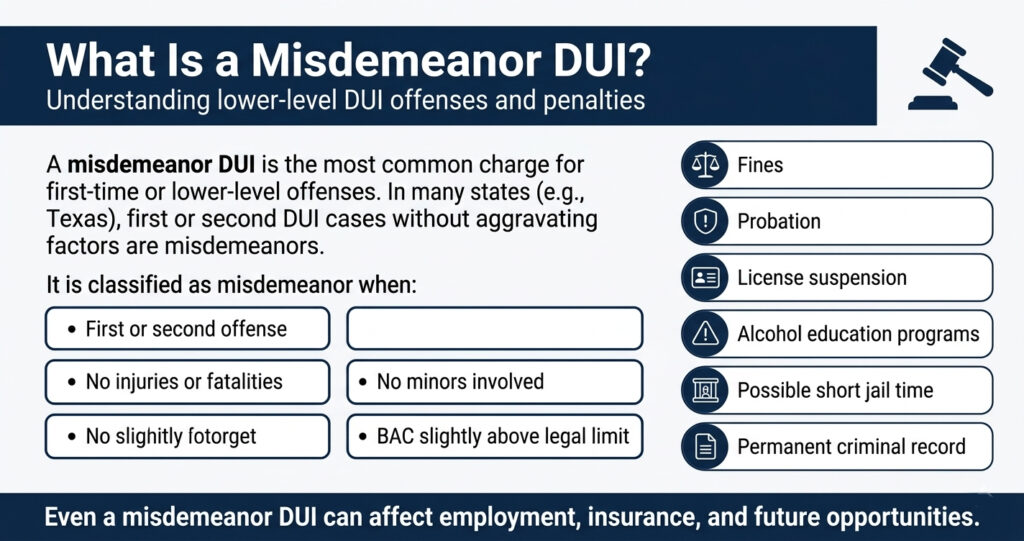
A misdemeanor DUI is the most common charge for first-time or lower-level offenses. In states like Texas, most first or second DUI cases without serious aggravating circumstances are treated as misdemeanors. A DUI is typically considered a misdemeanor when:
- It is a first or second offense
- No injuries or fatalities occurred
- No minors were in the vehicle
- BAC is slightly above the legal limit
Penalties may include fines, probation, license suspension, mandatory alcohol education programs, and possible short jail time. Even though it is less severe than a felony, it still results in a criminal record that can impact employment, insurance, and future opportunities.
What Is a Felony DUI?
A felony DUI involves more serious circumstances and carries significantly harsher penalties. It is generally reserved for repeat offenders or cases involving serious harm. A DUI may be charged as a felony when:
- It is a third or subsequent offense
- The incident causes serious bodily injury or death
- A child passenger is involved (in some cases)
- The driver has prior felony DUI convictions
Felony DUI penalties may include long-term imprisonment, high fines, permanent license revocation, and a lasting criminal record. These consequences often require immediate legal defense from a qualified Houston criminal defense attorney.
DUI Classification Explained
Law enforcement and prosecutors evaluate several factors before deciding whether a DUI is a misdemeanor or felony, including:
- Prior DUI history
- Severity of the incident
- BAC level
- Presence of injuries or fatalities
- Involvement of minors
- Property damage
Even if a DUI starts as a misdemeanor charge, certain aggravating factors can elevate it to a felony. Because each case is different, it is often helpful to consult a criminal defense lawyer near me who can evaluate the details of your situation.
Misdemeanor vs Felony DUI
The classification of a DUI charge plays a critical role in determining how severe the penalties will be. Even a first-time offense can be treated very differently depending on the circumstances involved. Understanding this distinction helps clarify the potential short-term and long-term consequences. The difference between these two classifications has a major impact on legal penalties and future consequences.
Misdemeanor DUI:
- Shorter jail sentences (or none for first offenses)
- Smaller fines
- Temporary license suspension
- Probation or community service
- Eligible for expungement in some cases
Felony DUI:
- Longer prison sentences
- Higher fines and court costs
- Permanent criminal record
- Long-term or permanent license loss
- Difficulty finding employment or housing
While both are serious, a felony DUI carries life-altering consequences that can extend far beyond the courtroom.
DUI Aggravating Factors
Certain facts or behaviors can significantly increase the seriousness of a DUI charge. These factors often influence whether prosecutors pursue enhanced or felony-level penalties. Even a single aggravating factor can change the outcome of a case dramatically. Certain circumstances can increase the severity of a DUI charge or lead to felony prosecution. These include:
- Extremely high BAC levels
- Driving with a suspended or revoked license
- Causing an accident with injuries
- Refusing a chemical test
- Prior DUI convictions
- Driving with a child passenger
When these factors are present, prosecutors are more likely to pursue harsher charges, and judges may impose stricter sentences.
Why Legal Representation Matters
DUI cases can be complex, and the outcome often depends on how the case is handled early in the process. Evidence such as breathalyzer results, police procedures, and traffic stops can sometimes be challenged. A skilled defense attorney may be able to:
- Challenge the legality of the traffic stop
- Question the accuracy of BAC testing
- Negotiate reduced charges or penalties
- Seek alternative sentencing options
This is why many individuals turn to a trusted DUI lawyer near me as soon as they are charged.
Get Legal Help for Your DUI Case Now
So, is a DUI a misdemeanor? In most cases, yes, especially for first-time offenders without aggravating circumstances. However, DUI charges can quickly escalate to a felony depending on prior convictions, injuries, or other serious factors.
Understanding the difference between misdemeanor and felony DUI charges is essential because the consequences can vary dramatically. Even a misdemeanor DUI can have lasting effects on your record and future. If you are facing DUI charges, getting help from an experienced criminal defense attorney like Juan L. Guerra, Jr. & Associates, PLLC can make a significant difference in your case outcome and long-term future.