

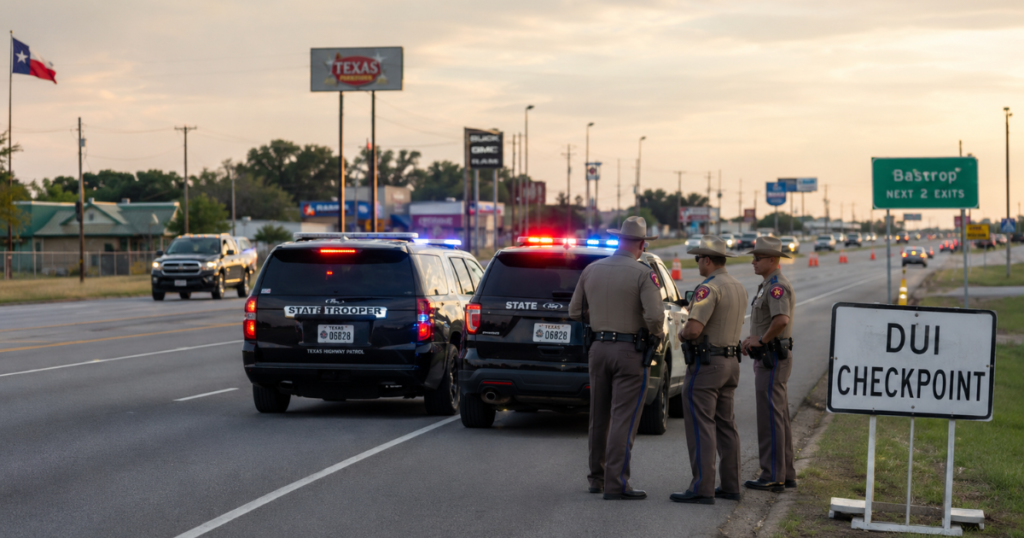
Many drivers wonder whether police can stop vehicles at DUI checkpoints in Texas. While sobriety checkpoints are used in some states to identify impaired drivers, Texas law treats these checkpoints differently. Understanding the legality of DUI checkpoints, how DWI enforcement works, and your rights during a traffic stop can help you navigate encounters with law enforcement.
In some situations, speaking with a DUI attorney Houston may help individuals understand their rights and legal options after an alcohol-related traffic stop.
Why Are DUI Checkpoints Not Used in Texas?
Texas courts have held that checkpoint programs require clear legislative authorization and operational standards. Although the U.S. Supreme Court has permitted sobriety checkpoints under certain circumstances, Texas has not adopted the legal framework necessary to implement them. Those facing charges arising from other DUI enforcement methods may consider consulting a DUI lawyer near me to understand their legal options.
Lack of Legislative Authorization
Texas lawmakers have not enacted specific statutes authorizing sobriety checkpoints within the state. Without legislation establishing how checkpoints should be conducted, law enforcement agencies lack the legal authority to create and operate checkpoint programs. Courts generally require clear guidelines that limit officer discretion and protect constitutional rights. Until such legislation is passed, DUI checkpoints remain largely unavailable in Texas.
Constitutional Concerns
Checkpoint stops involve temporarily stopping drivers without individualized suspicion of wrongdoing. Texas courts have expressed concerns about whether such stops adequately protect constitutional rights against unreasonable searches and seizures. Balancing public safety objectives with individual freedoms has been a significant legal issue. These concerns have contributed to the state’s reluctance to implement sobriety checkpoint programs.
Court Decisions
Several Texas court decisions have concluded that sobriety checkpoints require detailed procedural safeguards before they can be legally used. Courts have emphasized the need for standards governing how checkpoints are planned, operated, and supervised. Without legislative approval and clear operational rules, checkpoint programs may not satisfy constitutional requirements. These judicial decisions have played a major role in preventing the widespread use of DUI checkpoints in Texas.
How Texas Police Enforce DWI Laws Without Checkpoints
Even though traditional DUI checkpoints are not generally used in Texas, law enforcement agencies have several other methods for identifying and arresting impaired drivers throughout the state.
- Traffic stops for observed violations: Police officers may stop drivers who commit traffic offenses such as speeding, running red lights, failing to maintain a lane, making illegal turns, or other violations that create reasonable suspicion of impaired driving. During the stop, officers may look for signs of intoxication, including slurred speech, bloodshot eyes, or the odor of alcohol.
- DWI patrol units: Many law enforcement agencies assign specially trained officers to patrol areas where impaired driving incidents are more common. These officers are trained to recognize driving behaviors and physical indicators that may suggest intoxication.
- Saturation patrols: During holidays, weekends, and major public events, police departments often increase the number of officers on the road. These saturation patrols focus on identifying impaired drivers through active enforcement rather than stationary checkpoints.
- Citizen reports: Drivers who observe dangerous or suspected drunk driving may report the vehicle to law enforcement. Officers can then locate the vehicle and investigate whether the driver is impaired.
- Accident investigations: Many DWI arrests occur after traffic accidents. When officers respond to a crash scene, they may investigate whether alcohol or drug impairment contributed to the collision.
- Field sobriety testing: If an officer suspects impairment during a traffic stop, standardized field sobriety tests may be used to evaluate balance, coordination, attention, and other indicators of intoxication.
- Breath and blood testing: Law enforcement may request breath or blood samples when there is probable cause to believe a driver is intoxicated. These tests are commonly used as evidence in DWI investigations and prosecutions.
- Targeted enforcement campaigns: State and local agencies frequently conduct public safety campaigns aimed at reducing impaired driving. These operations often involve increased patrol presence in high-risk locations and time periods.
If you are facing DWI charges, understanding how law enforcement gathers evidence can be important when evaluating your legal options and potential defenses. An experienced attorney can review the circumstances of your case and help protect your rights throughout the process.
Texas Laws Related to DUI Checkpoints
Texas does not have a specific law authorizing DUI or sobriety checkpoints. However, several constitutional provisions, court decisions, and DWI statutes affect how law enforcement investigates and enforces intoxicated driving offenses.
- Driving While Intoxicated (DWI) – Texas Penal Code § 49.04: This statute makes it illegal to operate a motor vehicle in a public place while intoxicated. Although Texas does not generally use DUI checkpoints, officers may enforce DWI laws through traffic stops and other lawful investigations.
- Implied Consent Law – Texas Transportation Code Chapter 724: Texas drivers are deemed to have consented to chemical testing under certain circumstances following a lawful DWI arrest. Refusal to submit to testing may result in administrative penalties.
- Administrative License Revocation – Texas Transportation Code Chapter 524: This chapter governs driver’s license suspension proceedings that may follow a DWI arrest or refusal to provide a breath or blood sample.
- Protection Against Unreasonable Searches and Seizures – Texas Constitution, Article I, Section 9: Texas citizens are protected against unreasonable searches and seizures. This constitutional protection has played a significant role in concerns surrounding suspicionless checkpoint stops.
- United States Constitution – Fourth Amendment: The Fourth Amendment protects individuals from unreasonable searches and seizures by the government. Courts often analyze checkpoint programs under these constitutional standards.
- State v. Holt, 887 S.W.2d 16 (Tex. Crim. App. 1994): In this case, the Texas Court of Criminal Appeals held that sobriety checkpoints lacked the necessary legislative authorization and operational guidelines required under Texas law. This decision is a key reason DUI checkpoints are generally not used in Texas.
- Webb v. State, 739 S.W.2d 802 (Tex. Crim. App. 1987): Texas courts have emphasized that roadblock programs require carefully defined procedures and legal authority to satisfy constitutional requirements.
Government Link:
These laws and court decisions help explain why Texas generally relies on traffic stops, saturation patrols, and other DWI enforcement methods instead of traditional DUI checkpoints. Individuals facing DWI-related charges may benefit from consulting a Houston attorney criminal defense professional to better understand their rights and legal options.
Drivers’ Rights During a DUI Stop
Drivers stopped for suspected DUI or DWI have important constitutional and legal rights. Understanding these rights can help protect individuals during traffic stops and criminal investigations.
- Right to remain silent: Drivers generally have the right to avoid answering questions that may be self-incriminating. While basic identification information may be required, individuals are not obligated to discuss alcohol consumption, drug use, or other potentially incriminating details.
- Right to refuse certain field sobriety tests: Many field sobriety tests are voluntary. Although refusing these tests may not prevent an arrest, drivers generally have the right to decline participation in certain roadside evaluations.
- Right to protection against unlawful searches: Law enforcement officers must comply with constitutional requirements when conducting searches. Evidence obtained through unlawful searches may be challenged in court.
- Right to legal representation: Individuals arrested for DUI or DWI have the right to consult with an attorney. Legal counsel can explain the charges, review evidence, and help protect the driver’s rights throughout the case.
- Right to challenge chemical test results: Breath and blood test results may be challenged if testing procedures were not properly followed, equipment malfunctioned, or other errors affected the reliability of the results.
- Right to due process: Drivers have the right to contest criminal charges, challenge driver’s license suspensions, present evidence, and receive a fair hearing before penalties are imposed.
- Right to know the charges: If arrested, individuals have the right to be informed of the specific charges being filed against them and the legal consequences they may face.
- Right to challenge the legality of the stop: Police officers generally must have reasonable suspicion or another lawful basis to stop a vehicle. If the stop was unlawful, certain evidence may be excluded from court proceedings.
How a DWI Lawyer Can Help
A DWI attorney can provide valuable assistance throughout the criminal process. Legal representation may help protect your rights, challenge the prosecution’s evidence, and pursue the best possible outcome for your case.
- Review the legality of the traffic stop: A lawyer can examine whether law enforcement had reasonable suspicion or probable cause to stop your vehicle. If the stop was unlawful, certain evidence may be challenged or excluded.
- Examine testing procedures: Attorneys review how field sobriety tests, breath tests, and blood tests were administered. Errors in testing procedures may affect the reliability of the results.
- Challenge improperly obtained evidence: If evidence was collected in violation of your constitutional rights, a lawyer may seek to suppress that evidence and limit its use in court.
- Negotiate with prosecutors: An attorney can communicate with prosecutors on your behalf and explore opportunities for reduced charges, alternative resolutions, or favorable plea agreements when appropriate.
- Protect driving privileges: DWI arrests may trigger administrative driver’s license suspension proceedings. A lawyer can help challenge license suspension and represent you at administrative hearings.
- Represent clients in court: If the case proceeds to court, an attorney can present legal arguments, cross-examine witnesses, challenge evidence, and advocate for your interests throughout the proceedings.
- Pursue reduced charges or dismissal: Depending on the facts of the case, a lawyer may identify weaknesses in the prosecution’s evidence and seek reduced penalties, reduced charges, or dismissal of the case altogether.
- Provide legal guidance throughout the case: A DWI lawyer can explain your rights, answer questions, help you understand potential consequences, and guide you through each stage of the criminal justice process.
Get Legal Help After a Texas DWI Arrest
DWI charges can have serious consequences affecting your freedom, finances, and driving privileges. Understanding Texas DWI laws and your legal rights is essential when facing allegations of impaired driving.
Juan L. Guerra, Jr. & Associates, PLLC may assist individuals dealing with DWI charges, license suspension issues, and criminal defense matters throughout Texas.